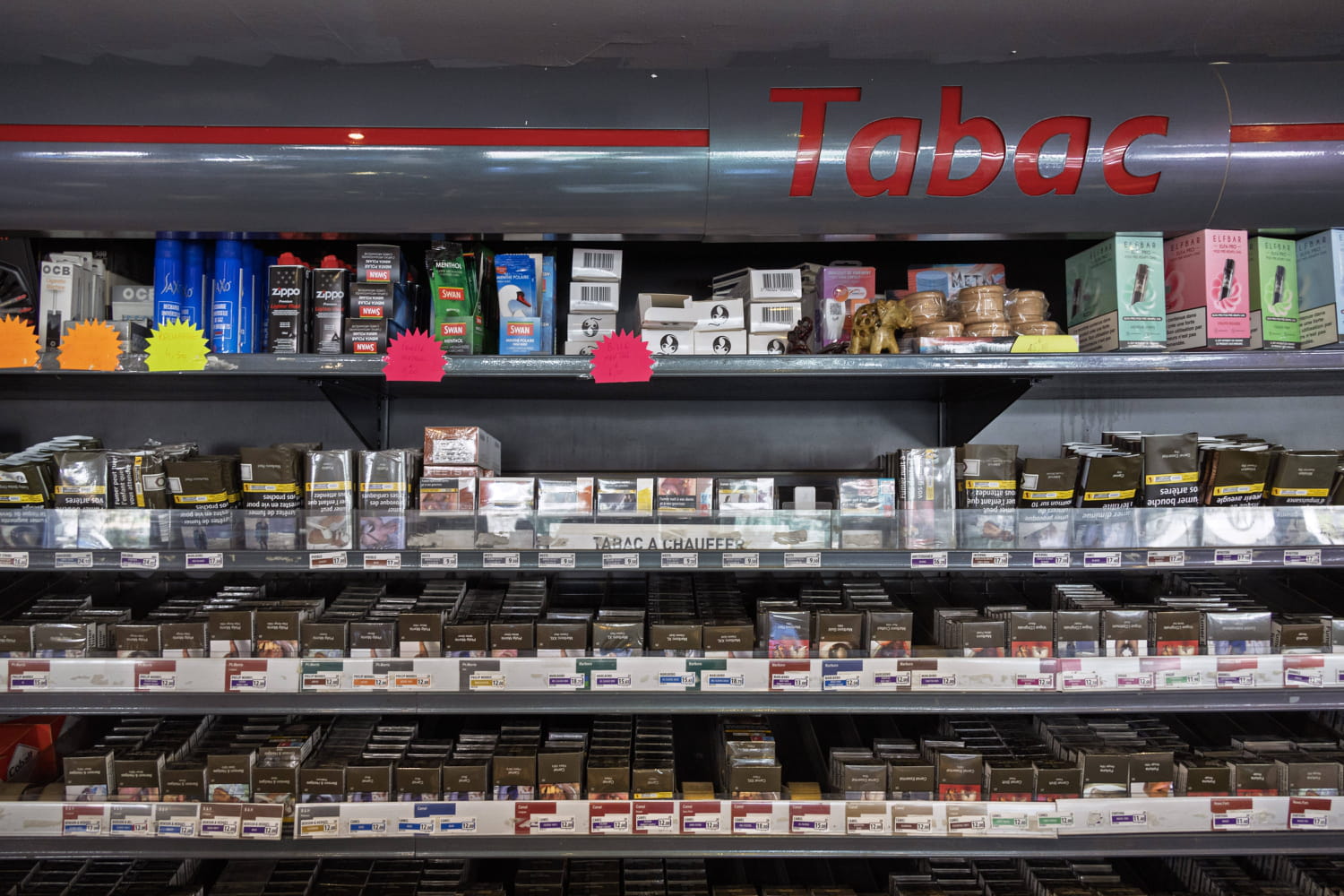
March 2025: French Tobacco Market Sees Unexpected Price Drops Amidst Shifting Strategies
In a surprising turn of events, March 2025 has brought an unexpected twist to the French tobacco market. Contrary to the customary upward trend driven by inflation and taxation, consumers are witnessing a slight
diminution prix tabac – a reduction in the price of certain tobacco products. This peculiar development marks a strategic shift by manufacturers, triggering what many are calling a "price war" and offering a rare moment of relief for smokers across France.
For years, January has typically heralded an increase in tobacco prices, a direct consequence of taxation indexed to inflation. 2025 was no different, with an average hike of €0.35 in January reflecting this mechanism. Manufacturers usually pass these increases on within the first three months of the year. While February saw a relatively stable average weighted price for cigarettes (€12.13 in January), with some higher-priced brands catching up and new, lower-priced options entering the market at €10.40, March has presented a more dynamic, and indeed, downward adjustment. This article delves into the intricacies of these changes, exploring what's driving them and what they mean for consumers and the French tobacco landscape.
The Unexpected Reversal: Unpacking France's March 2025 Tobacco Price Drops
The conventional wisdom that tobacco prices only go up in France has been challenged this March. The weighted average price of a pack of cigarettes is set to decrease by an average of 5 centimes. This seemingly modest reduction is significant because it goes against the established pattern. The primary catalyst appears to be a fierce "price war" among manufacturers, strategically repositioning their offerings to gain market share.
This battle is being fought on two fronts: by reinforcing the struggle at the lowest price points and, more subtly, by withdrawing certain higher-priced products from the market. While the immediate impact of these withdrawals isn't always obvious to the casual observer scrolling through price lists – as withdrawn references simply disappear rather than showing a visible price change – their collective effect is profound. By removing more expensive options, the overall average price of available products naturally declines.
In February 2025, a total of 437 tobacco references were submitted for state approval. Crucially, 20 of these, with a notably high average price of €12.58, were subsequently withdrawn. This strategic move alone contributed to a -€0.03 drop in the average price of the remaining references. When considering the weighted average price across the 20 leading cigarette brands, which account for over 95% of sales, the decrease from February to March 2025 is a clear -€0.05. Although the individual impact on a smoker's budget might appear small, this
diminution prix tabac signals a tactical shift that could have broader implications.
Decoding the Diminution: Specific Changes for Cigarettes and Rolling Tobacco
While the average weighted price drop is 5 centimes, specific brands are seeing more noticeable reductions, providing tangible savings for consumers willing to switch or those already loyal to these brands. According to French customs data, some popular cigarette packs will see price decreases of up to 20 centimes or more.
Let's look at some key examples:
- Camel Filters No.1 (20 units): Price drops from €10.60 to €10.40 (-€0.20)
- Winston Bleu No.1 & Rouge No.1 (20 units): Both move from €10.60 to €10.40 (-€0.20)
- Corset Mauve & Ice (20 units): Similar reduction from €10.60 to €10.40 (-€0.20)
- The King Filters (20 units): Also drops from €10.60 to €10.40 (-€0.20)
- The King Filters (25 units): A more substantial decrease from €13.25 to €13.00 (-€0.25)
These specific brand adjustments clearly illustrate the "price war" in action, with manufacturers directly competing at critical price points. For more detailed information on which brands are affected, you can refer to our article on
French Tobacco Price War: Which Brands See Reductions in March?
The trend of a modest
diminution prix tabac isn't confined solely to conventional cigarettes. Rolling tobacco (tabac à rouler) has also experienced a slight dip. From February to March 2025, the weighted average price for brands representing over 95.6% of sales decreased by -€0.01. The current average price for a 14-gram packet of rolling tobacco stands at €8.23. While less dramatic than some cigarette price drops, it underscores a broader market dynamic of competitive adjustments.
Cigars, a separate category, have seen a contrasting trend, with an overall increase of +0.71%. However, the data for this category is often more complex to analyze due to the vast array of products and niche markets.
The Intricacies of Innovation: Heated Tobacco Market Dynamics
The heated tobacco sector, often seen as a modern alternative, presents a more complex picture. British American Tobacco (BAT), for instance, withdrew all its heated tobacco products in February after having updated their prices in January. As of March, these products had still not been resubmitted for homologation, effectively making them unavailable.
This leaves Philip Morris with its IQOS Heets as the dominant player in the French heated tobacco market. Philip Morris continues to commercialize its Heets under eight references, typically in 5.3g or 5.4g packs of 20 sticks. While the price for these Heets packets has remained stable at €10.50 since January, Philip Morris made a strategic withdrawal of its "Heets Blue Selection" (5.5g), a significant move given it represented 31% of its heated tobacco sales.
This specific withdrawal won't result in an apparent price change for the consumer, who will likely shift purchases to the equally priced 5.3g or 5.4g packets containing the same number of sticks. However, the subtle reduction in the tobacco content per stick for a fixed price represents a very slight decrease in value for the consumer, and consequently, a minor reduction in revenue (-€0.04 per packet) for the manufacturer, the buraliste (tobacconist), and the state (-€0.02 for social security and the state budget). This clever maneuvering highlights how manufacturers can adjust product value without directly altering the displayed price.
Beyond the Price Tag: Implications and What it Means for Smokers
This rare period of
diminution prix tabac in France raises several important questions and offers insights into the evolving tobacco market. Typically, France's public health policy strongly advocates for consistent price increases as a key strategy to discourage smoking. This temporary reversal could be seen as a challenge to that long-term goal, even if the reductions are minor on average.
Implications for Stakeholders:
- Smokers: While some may welcome the small savings, the overall impact on individual budgets is likely marginal. However, it provides an opportunity to try different brands that are now more competitively priced.
- Manufacturers: The "price war" indicates intense competition. Companies are clearly willing to sacrifice some margin or adjust product offerings to maintain or grow market share in a shrinking market.
- Buralistes (Tobacconists): Fluctuations in prices can be complex for retailers. While lower prices might theoretically attract more sales, the overall impact on their margins, especially with subtle product adjustments like those in heated tobacco, needs careful monitoring.
- Government and Public Health: The slight reduction in state revenue from tobacco taxes, however small, runs counter to efforts to use taxation as a public health lever. This situation may prompt a review of the indexing and pricing mechanisms.
Practical Tips for Smokers:
If you're looking to make the most of these changes, here's what you can do:
- Check Official Lists: Price lists are usually published by the French customs service (douanes françaises). Keep an eye on these for the most up-to-date and specific brand changes.
- Talk to Your Tobacconist: Your local buraliste is often the best source for real-time information on specific brand price movements and availability.
- Consider Your Options: If you're not strongly brand-loyal, explore the brands that have seen reductions. A 20-25 centime saving per pack, while small, can add up over time.
- Be Aware of "Hidden" Changes: Especially for heated tobacco, understand that a stable price doesn't always mean stable value. Be mindful of changes in product weight or composition.
For a more comprehensive look at what these changes mean for your personal tobacco consumption, check out
Is Your Tobacco Cheaper? March 2025 Price Changes Explained.
Conclusion
March 2025 marks a curious chapter in the history of tobacco pricing in France. The unexpected
diminution prix tabac, particularly for cigarettes and rolling tobacco, stands as a testament to fierce market competition and strategic maneuvering by manufacturers. While the average impact on a smoker's wallet is modest, this "price war" signals a dynamic shift, challenging the long-held assumption of continuous price escalation. It remains to be seen whether this trend is a temporary blip or a harbinger of more nuanced pricing strategies in the future, as manufacturers grapple with evolving consumer habits and stringent public health policies. For now, French smokers have a brief, albeit small, reprieve from the relentless march of rising tobacco costs.